we have bottled!
I can't tell you what this means to us. I will just give a little atmosphere. We began tracking the ripening of fruit in late May, concerned that we might have to prepare to begin harvesting in July (more on that below). We are good enough at projecting that even in May we felt pretty confident that we would not harvest anything till the beginning of August. Koko and Alex made our first visit with ripe fruit on the vine on July 17 and confirmed our very early prediction. We made our next visit on the 28th and visited every vineyard in the East. It was really wonderful—everywhere we went, you could taste fruit—not just weird stuff that one day would be fruit, but beautiful, flavorful fruit that you could feel wine in. Stampede Zinfandel: delicious. Kirschenmann Chenin: amazing, at 19 brix. You could not just imagine wine, you could harvest the fruit and crush it. We put dates on the board.
Yesterday, we brought in our first fruit. Tegan dropped off our 978 lbs of Chenin around 9 am. Alex had designed a protocol for it to maximize the expression of the skins and yet keep acidity high. It is so different from what anyone would expect, but this vineyard in the center of Lodi is perfect for making high acid white wines. The two keys are dry farming and catching the fruit at perfect ripeness. Acidity can disappear overnight. At the beginning of our work, I was always waiting for the highest intensity of flavor before the fruit crashed; now, under Tegan and Alex's tutelage, we watch for the very beginning of ripeness and then pursue the intersection of peak flavor and acidity.
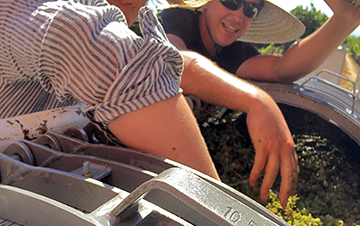
An hour or so after Tegan dropped off his Chenin, we received our two tons of Verdelho from Vista Luna. This vineyard is almost always our first, and almost always is first under the threat of roasting. For the last several years, the fruit has completed veraison and just started becoming charming and flavorful when a week of 100 degree days will hit the vineyard. Then there is a race to get the fruit off before the beautiful perfume of the Verdelho cooks out. We were super vigilant both last year and this year and feel that we caught the fruit at its peak. To the left are Koko and Alex inspecting the first pressload of Verdelho at the completion of pressing. It was the first day that Koko (an intern from the restaurant world of Los Angeles) ran the presses and she was magnificent. She and Alex did the work of five and we were cleaned up and drinking Champagne by 6:30.
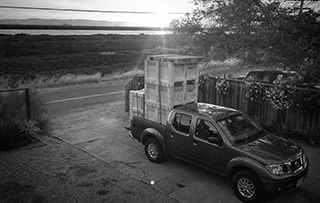
Today, Koko and I began the day at dawn by returning the Verdelho bins to Bokisch in Lodi. The central cogitative focus of harvest is bin logistics. As I write, we are now driving back through the eastern suburbs of the Bay Area to join Brenna at a tasting in San Francisco. We are never busier than we are now, and we could not be happier.
This is what is coming up:
As you know, all of us have been beginning harvest in Northern California earlier and earlier. This year was 2 or three days later than last year, but still a month earlier than it would have been around 2002. The cause is the drought: the dry growing conditions, especially very early in the growing season when the flowers and then the young fruit are still forming, throw the vines into a mode of urgency. This in turn causes them to speed up their focal biological processes. The whole physiology of the vine acquires a new dynamic determined to complete reproduction more quickly.
There are two things that are, in my mind, very interesting about this. I have mentioned one before, but one was only revealed to us this year:
First: the much shorter growing season does not seem to affect quality negatively. If anything, we are harvesting, better, riper fruit at lower potential alcohols. This year's Kirschenmann Chenin should finish at about 12%; 2-3 degrees lower than it would have been 10 years ago. The biggest factor is that bringing the fruit in one month earlier exposes it to one month's less dehydration in the hot, dry air of harvest; and one month's less solar radiation, cooking and debilitating the skins. This means that in the end, the drought, for all of its other very serious consequences, is probably improving the quality of wines made all over the Northwest.
Second—and this is the new thing—that none of us expected: the vines are reacting to the drought on multi-year, not one-year cycles. What I mean is the following: though the drought on the whole is not over, during the crucial period in the spring, the vineyard soils around Northern California were at full capacity for water. The vines could not have had access to more water. And yet, their physiological dynamics were no different from 2015, and, in some cases, advanced—as if the drought were even more severe. This means that they had accustomed themselves to certain conditions, and a certain physiology, and that the presence of water in the Spring of 2016 was not enough to reverse the dynamic they had begun. This is not shocking: vines live a long time and and we know that pruning, and even shoot- and leaf-thinning, have multi-year consequences. So why not the drought?
Yet none of us had known it in advance. We learn all the time. This learning is our fuel.