2014 spring release
These wines are all precocious. We have been tasting them in the winery since the beginning of January, and all of them are wines that are racing ahead in their development. Some are from the beautiful, early harvest of 2013; some from the Annus Mirabilis of 2012. One is utterly new and truly stunned us with its excellence when we tasted it for the first time in months in January.
TWe are so fortunate this year: we got 2 tons of Verdelho from Lost Slough, and it has never ripened better. The lead-up to harvest was early—but slow, graceful, unhurried. The fruit was in perfect balance on the vines, and well shaded, but not hidden, by the canopy. We could wait for perfect ripeness and made many visits to the Delta to marvel at the dignity of the vineyard. The wine is powerful, slightly musky, and very cut with the Verdelho's surprising warm-weather acidity. This is a particularly excellent edition of this wine.
This was another antastic year for Farina, the rocky, east-facing
Sauvignon Blanc
vineyard
high up on Sonoma Mountain. The vineyard produced a third more fruit
than
it normally
does—and we were offered more rows by Joe Votek, who farms it. This
allowed us to make
the
most LSB that we have ever made (and an additional wine from the new
section. It is
still
fermenting, and so, unnamed). The quality of everything was superb. Once
again, because
the
growing season was so cool and graceful, we harvested late and without
any
haste. The
intensity of all flavor and the integrity of the acidity are both very
high.
This is one of the few wines that we protect from oxygen and one of the
few for which we
use
enough So2 to inhibit malolactic fermentation. In 2012, the wine had a
granular power;
this
year the wine has much more smoothness and beauty—a wine the Italians
would call
“morbida.” The wine is not subtle, but nor is it loud.
We are getting better and better at capturing the stunning potential of Markus Bokisch’s hillside Verdelho vineyard in the Borden Ranches section of Lodi. The vineyard is supremely rocky and full of iron; cool wind flows down from the nearby Sierras to keep the vines cool as the fruit ripens. Once again, we pressed the fruit very carefully and minimized both skin and oxygen contact. We fermented in barrel, but have kept the barrels topped during the 5 months of maturation, and we have prevented complete malo-lactic fermentation. The wine is very sharply etched, with persistent minerality and a severity that makes the head snap back.
It also has the power that marks the 2013 vintage. We had great success with the wine in 2012, but that wine in the end seemed somewhat rustic and brutish—raw power. This year we have produced more of a diplomat, a Roman Senator.
And just as the Verdelho from Lost Slough was bounteous, so was the Gewurz. We got nearly 2 tons of this fruit too. Just as in 2012, we both barrel-fermented the wine and inhibited malo. The wine is powerful as always—more raucous and less sophisticated than the 2012. There is no pot-pourri, no perfume. The wine is all seriousness—or, let us say, has the seriousness of the dance floor at 2 am. It is not here for show.
This wine is a coppery-colored blanc-de-noir from deeply colored, aromatic Cinsault grapes. The fruit from this 140 year-old vineyard ripened relatively quickly in this warm, dry year, and with a very balance and fruitful crop. The wine is intense and delicate at once; aromatic, perfumed, feminine. We inhibited malolactic fermentation to some degree, and preserved the beautiful acidity of this extraordinarily well-drained vineyard. The wine is a beautiful Blanc de Noir again—much more a white wine this year, than a rosé, just as it was in 2012. The vineyard rewards us and we get better at working with it.
We pruned severely in the winter of 2012 at Guman. We knew that the
bounty
of 2011 would
sap
the plants, and we wanted to make sure that we did not ask too much of
the
old vines in
the
next year. We were equally severe in shoot-thinning, and all of our work
paid off. By
the
time w were inspecting the clusters for balance and ripeness, everything
in the vineyard
was
perfect. When we green-thinned, we dropped about 6 clusters on the
ground.
For the whole
vineyard. In the end, we made 49 cases, half of what we made in
2011.
This old-vine Chardonnay vineyard is the crown jewel of the Project. The
wines are long
and
complex and embody nobility in a way that one recognizes instantly and
clearly. The 2012
wine is especially complex, but also in some ways more tame, less
extreme,
than some
other
versions. There was less influence of flor; the wine still seems more
like
Jura than
Napa,
but is clearly classical Chardonnay.
This a very special version of this wine; in some ways returning to its origin as a single vineyard wine from the Tenbrinks' Babylon vineyard in 2006, in other ways crafting something utterly new for us. The is a complete reflection of the farming of Steve Tenbrink and the unheralded terroir of Suisun Valley. Steve grew more than 90% of the fruit, and all of it in Suisun.
The wine is about 60% Petite Sirah from Babylon, 30% Cabernet Sauvignon from Wolfskill; the remaining 10% is Cinsault from Bechtold and Syrah from Hudson, a quadrivium of noble vineyard sources. In 2012, after the near tragedy of 2011, we harvested perfectly ripe fruit at the end of a long, graceful growing season. The fruit from Suisun was perfect; the Petite Sirah has never been better, with superb maturity and no over-ripeness. We decided to make this wine as purely Tenbrink as possible, to reflect the excellence of not only of Steve's farming, but of the sites he has chosen. The wine is dark, sophisticated; a complex window into a barely known land.
The Fall of 2012 was glorious in Lee Hudson's Widowmaker Syrah block. The catastrophe of 2011 was still present in everyone's imagination in September 2012, as the fruit ripened early, and in perfect conditions of dry, cool air. The wine is intense and animal, with the complexity that we have only found recently in the Golgotha, from the higher, northern section of the rows. 2012 is so good that Androkteinos equals Golgotha from previous years, and the Golgotha soars. The wine is dense but graceful and perfumed—not all animal, but somehow beautiful and frightening at once.
This is a vineyard that we have yearned for for years: an excellent, hillside, old-vine Cabernet vineyard—hidden in an appelation that does not demand Napa prices. The vineyard was well known to Steve Tenbrink for years—he lives just below its slopes in the north eastern corner of Suisun Valley. In 2007 he took one look at my very expensive Cabernet from the young vines at Margit's on the west side of Spring Mountain, and said: “I can find better Cabernet than that, and be back with in 10 minutes.” That was the first year that we harvested Wolfskill; we made the wine together for Steve's family label. I declassified and did not release 100% of the wine I made from Margit's that year.<br>
I finally got into Wolfskill to make Cabernet for Scholium in 2012. The wine is a perfect reflection of the wines our teachers and progenitors were making in the 70s. Perhaps a little higher in alcohol, as Jon Bonné would point out—but perfectly ripe, and at the same time, light, finely articulated, and perfumed more by green spices than purple fruits.
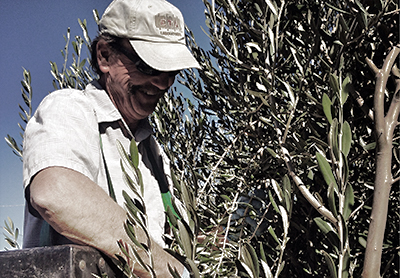
In 2012, The Tenbrinks made their first oil from the trees they had planted, and the oil was amazing—one of the very best I have ever tasted. Cloudy, warm, rich, with excellent freshness and a kind of racy acidity. So green that it reminded me of basil, celery, chiles more than it did of fruit. I asked them if I could have some olives this year, and now they have made that winemaker's dream—among so many others—possible for me to realize. We harvested the fruit on a sunny and warm November 5 and brought it to the amazing local mill (Il Fiorello—Suisun Valley has so many surprises!), where it was pressed that night. By midnight, we had 30 gallons of oil. I am bottling it in small bottles (the same as Riquewihr) to preserve it once it is open, and because it is so precious. The oil is settled but unfiltered. It is ready to drink right now but will surely keep till next harvest. “Drink” might be the right word.