toward the close
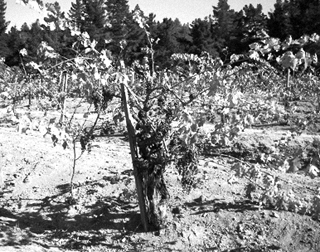
We have had two harvests in a row without the expected roasting heat as the grapes were ripening. In many previous years, we devoted much care to cultivating canopies with adequate shade to protect the berries from the bleaching and desiccating heat of hundred-degree days. This year, it was necessary to allow Margit's, even with its west facing slope and total absence of irrigation, to ripen into November before harvesting its grapes. But then, as the grapes were proceeding slowly, gracefully, toward a beautiful mid-November harvest, perhaps a month later than usual, Margit's was blasted by searing wind blowing from the landlocked north. For two days and nights, the wind scoured hilltops, slopes, blew all of its scorched debris into whirlwinds on the valley floor. The vineyard looked like a biblical wasteland, a land of salt columns, swirling dust, and leaves seeming to flee the vineyard in a rush downhill. The grapes hung naked, unprotected, on vines that seemed dead and petrified.
Now, these grapes are nearly finished fermenting, rescued from the vineyard and secure in a series of puncheons and barrels. They are not roasted, but have a grave intensity that corresponds well to the desert they escaped.
The cellar is full of these puncheons, and of two bins and two barrels of Hudson syrah. The syrah on the edge of its cool creek bed never felt the blast of the north wind; their harvest was determined not by heat but the biblical threat of deluge. The grapes are soft, rich, and ripe like Christmas pudding. They are fermenting slowly, with infrequent punchdowns but submerged caps. They come from a world that seems the opposite of Margit's but hold equal promise.